SELL LEMONS STRATEGY GUIDE
Sell Lemons strategy: how to progress faster
A practical way to diagnose your slowest step, spend cash where it pays back, and decide when a rebirth, evolution, or ascension is worth more than another short upgrade.
- Primary intentProgression strategy
- Best forMid-game Roblox runs
- Core inputYour current bottleneck
- ReviewedNovember 16, 2026
QUICK ANSWER
What is the best Sell Lemons strategy?
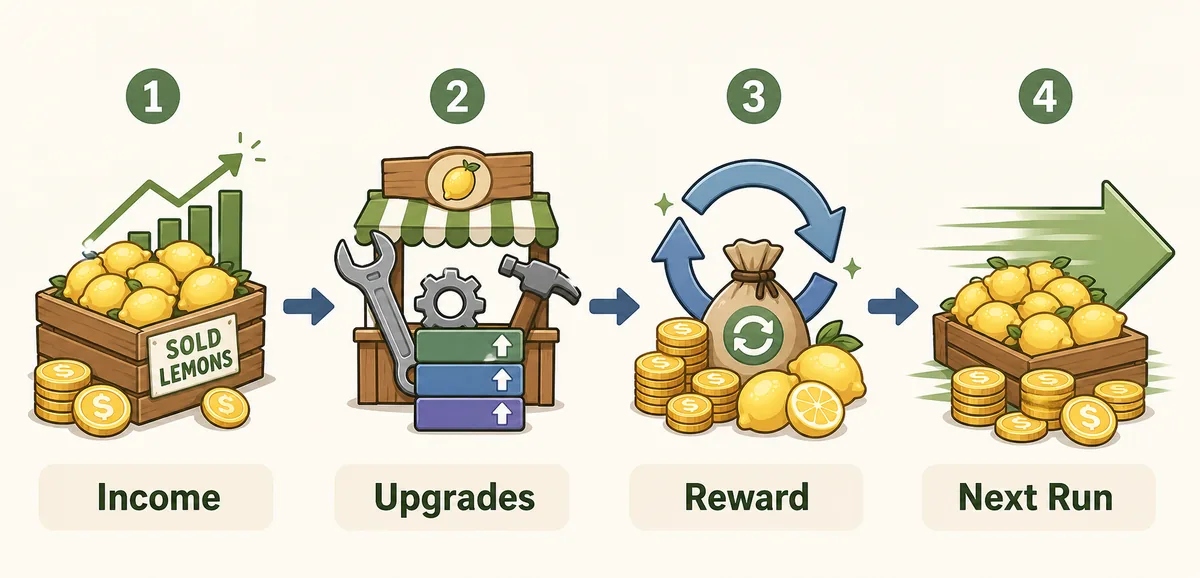
The best Sell Lemons strategy is to remove the slowest part of your current money loop before buying a convenient upgrade. Watch one complete cycle: producing lemons, carrying or storing them, selling them, and returning to the next purchase. The step that makes you wait, walk, or leave inventory unused is the bottleneck. Fix that step first, then measure the next cycle again.
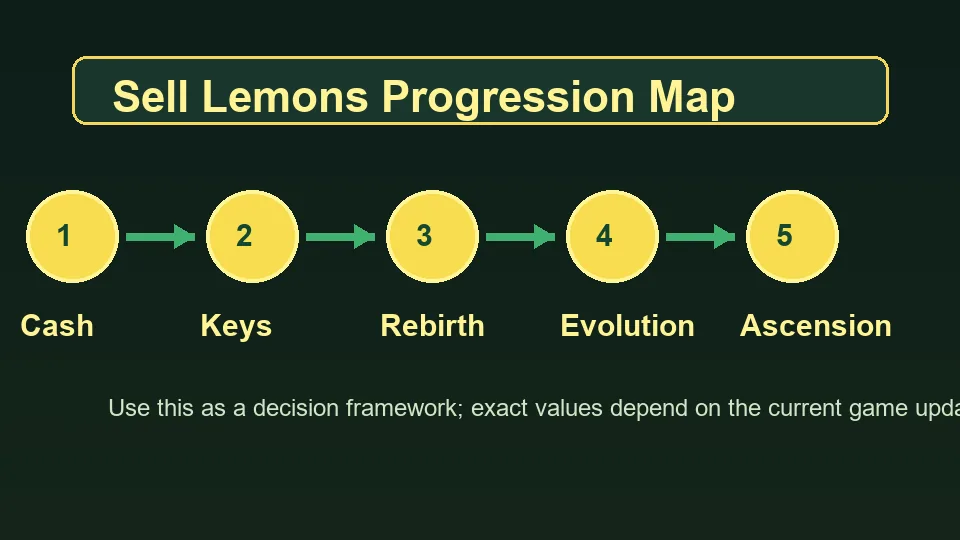
This approach is deliberately broader than a powers list. The homepage gives a short route overview, while the powers, orchard, rebirth, evolution, and ascension pages explain each system on its own. This Sell Lemons strategy connects those systems by asking one practical question: what action will make the next ten minutes of play more productive?
Spend on production when the stand is idle, capacity when stock fills early, selling speed or automation when a queue forms, and travel convenience only after the core loop earns reliably. Before a reset, compare the progress you give up with the permanent effect you gain. A reset button appearing is a signal to calculate, not an instruction to click.
DIAGNOSE THE LOOP
Find the part of Sell Lemons that is costing time
Use the same five observations at the start of a run and after every major upgrade.1. Nothing is ready to sell
If you stand around waiting for lemons, supply or production is the first suspect. A faster selling station cannot help when there is no stock to process.
2. Your inventory fills before the return trip
Capacity is the bottleneck when new production is ready but you must abandon a route, drop items, or make extra trips. More production can increase waste until storage catches up.
3. A pile waits at the selling point
A queue means the loop creates stock faster than it converts cash. Improve selling speed or automation before adding another supply boost.
4. Travel takes longer than the purchase
Remote Buy or another access power can be valuable when repeated walks interrupt a profitable loop. It is a time purchase, so judge it by saved trips rather than its name.
5. A reset is close
When rebirth, evolution, or ascension is available soon, the remaining run is shorter. Delay a marginal upgrade unless it can repay its price before the reset.
REPEATABLE MONEY LOOP
Run the same Sell Lemons strategy cycle every session
A repeatable routine makes upgrade payback visible and prevents random spending.Observe one full cycle
Start a timer or simply watch one production-to-sale cycle. Note where you wait, where stock caps, and how often you walk to a shop or station.
Buy one bottleneck fix
Choose a single upgrade that directly targets the observation. Do not combine three purchases and then guess which one helped.
Test the same action again
Repeat the cycle with the same route and amount of attention. If the delay moved somewhere else, update your diagnosis instead of defending the old purchase.
Save a reset buffer
Keep enough cash or resources for the next meaningful milestone. A strategy that spends everything on convenience can make the next reset feel slower.
Record the result
Write the upgrade name, the symptom it fixed, and the new symptom you see. A short note is enough to stop old tier lists from controlling a changed game build.
UPGRADE PAYBACK
Match the symptom to the next purchase
The menu can change after an update, so use the effect shown in the live game rather than a copied price table.| What you notice | Likely bottleneck | Strategy response | What to measure |
|---|---|---|---|
| You wait with no lemons | Production | Raise supply or production first | Idle seconds per cycle |
| Storage fills quickly | Capacity | Increase capacity before more supply | Full trips and dropped stock |
| Stock queues at the stand | Selling speed | Improve conversion or automation | Time from pickup to cash |
| Walking dominates the run | Access | Consider Remote Buy after core upgrades | Trips saved each cycle |
| Reset is nearly ready | Short run horizon | Save unless payback is immediate | Cycles before reset |
| A new system has opened | Unknown value | Read its live description and test safely | Observed effect, not rumor |
STAGE PRIORITIES
Change the strategy as your run changes
Early, mid-game, and late-game decisions use the same bottleneck test but different time horizons.
Early run: make income dependable
Build the shortest loop between production and selling. Favor the upgrade that removes the first visible wait, and avoid chasing hidden objectives while the basic income cycle still collapses.
Mid-game: protect conversion
Once production is steady, capacity, selling speed, automation, and access compete for cash. Use the decision table and buy the one that removes the most repeated interruption.
Orchard window: treat mutations as a separate lever
The Orchard can add a different income or growth route. Keep its harvest goal clear, then return to the Orchard guide for tree and fruit details instead of mixing an unverified mutation value into your core upgrade order.
Late game: value permanent progress
When evolution or ascension is close, a temporary boost has less time to repay itself. Verify requirements, note the current run state, and compare the next reset reward with one more normal cycle.
After a reset: diagnose again
A reset can change which step is slowest. Rebuild the loop in order, but let the new symptom choose the next purchase rather than replaying an old sequence automatically.
RESET TIMING
When should you rebirth, evolve, or ascend?
Use a reset when the permanent reward changes the next run enough to beat the value of staying. The exact formula and requirements are version-sensitive, so this page does not invent a universal threshold. Instead, compare three facts from the current menu: what you lose, what you gain, and how many productive cycles remain before the reset.
A good Sell Lemons strategy keeps a short reset note. Record the cash you can still spend, the next upgrade that is affordable, the reset reward shown in the game, and the first purchase you will make afterward. This turns an emotional click into a repeatable test. The dedicated Rebirth, Evolution, and Ascension guides contain system-specific requirements; this section only decides when to switch from earning to resetting.
| Run signal | Wait when | Reset when |
|---|---|---|
| A major upgrade is one cycle away | It removes the current bottleneck | The reset clearly repays more than that upgrade |
| Most time is idle or walking | A cheap fix can restore the loop | The permanent reward addresses the same delay |
| The reset reward is unclear | The live description needs checking | You can name the reward and first post-reset purchase |
| A late-game gate is ready | Requirements or resources are incomplete | The current run has reached its natural slowdown |
WORKED SCENARIO
A five-minute strategy check
Use this example to turn a vague feeling of slow progress into a measurable choice.The symptom
You produce lemons quickly, but storage fills before you reach the selling point. You are making extra trips and leaving production idle.
The first decision
Capacity is the bottleneck, so you compare a capacity upgrade with a faster production upgrade. The capacity option removes the repeated full trips, while more production would increase the pile you cannot carry.
The test
Buy capacity, repeat the same route, and observe whether the stand now becomes the slowest step. If stock queues, the next purchase should target selling speed or automation.
The reset check
A rebirth is available, but one more capacity purchase will improve several cycles before the reset. You keep the purchase only if the current menu shows enough remaining cycles to repay it; otherwise you save and reset.
The lesson
The correct order came from the symptom, not a permanent tier list. When an update changes prices or effects, the same five-minute test still works.
NEXT GUIDES
Connect the strategy to focused Sell Lemons guides
This page owns the cross-system decision: what to fix next and when to change direction. Use the focused guides for exact system rules, current requirements, and route details. Keeping those jobs separate makes each page easier to update after a Roblox patch.
Start with Powers for upgrade categories, then open Rebirth, Evolution, or Ascension when the choice becomes permanent progression. Orchard and Global Upgrades cover their own mechanics and are linked here because they can change the value of a cash loop.
- Upgrade categories
- Sell Lemons Powers
- Reset timing
- Rebirth guide
- Late milestone
- Evolution guide
- Endgame reset
- Ascension guide
- Orchard system
- Orchard guide
- Permanent boosts
- Global Upgrades guide
FAQ
Sell Lemons strategy FAQ
SOURCES AND LIMITS
How this Sell Lemons strategy was checked
The strategy uses observable gameplay decisions and separates version-sensitive facts from stable planning advice. Exact prices, multipliers, requirements, and timers can change after Roblox updates.
- Official Sell Lemons Roblox experienceUse the live menus and descriptions as the final check for effects, prices, and reset requirements.
- Sell Lemons homepage routeBroad progression context; this article adds the cross-system bottleneck and payback workflow.
- Sell Lemons Powers guideFocused upgrade categories and Remote Buy context.
- Sell Lemons Rebirth guideSystem-specific reset details remain on the dedicated page.